• Score: 89
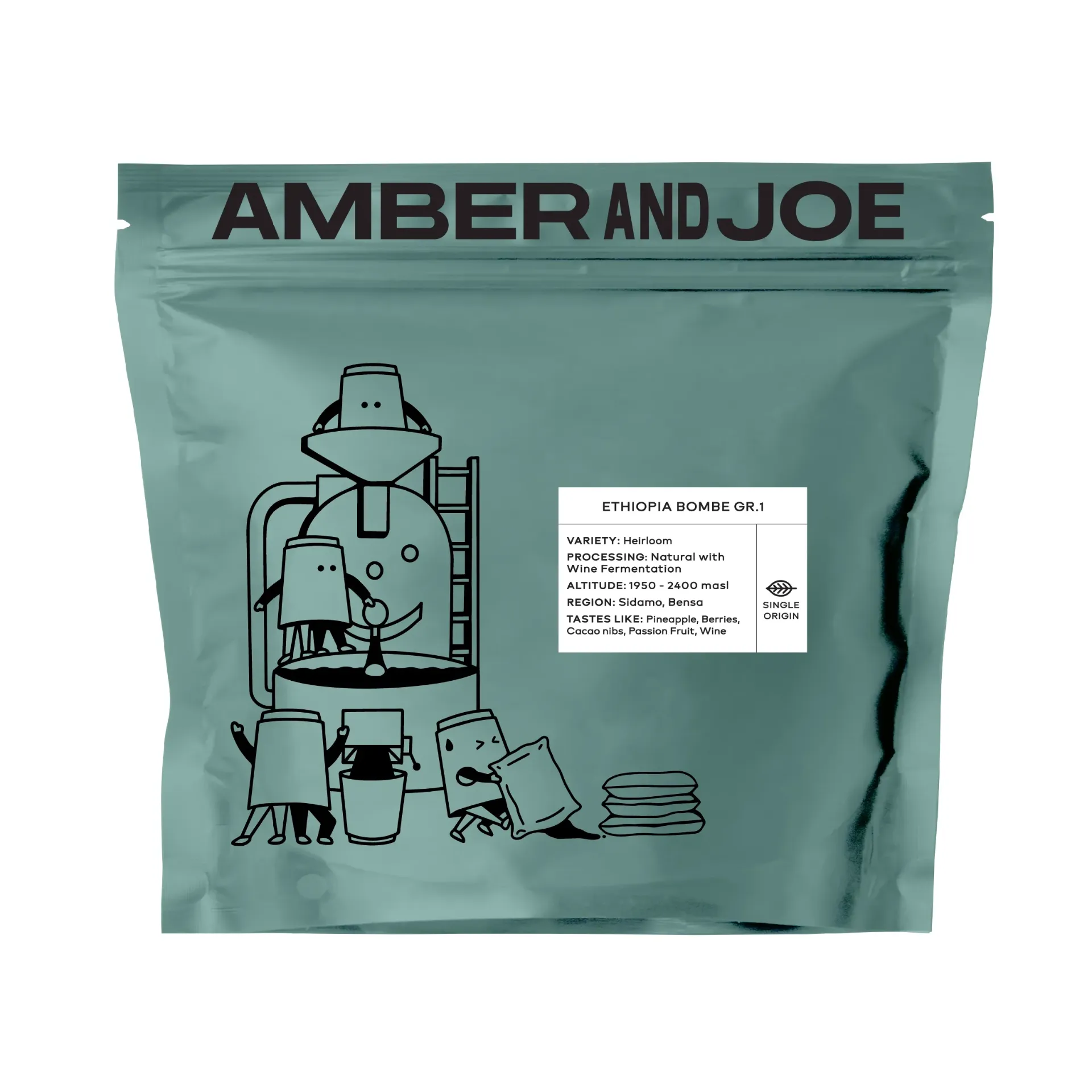
• Variety: Heirloom
• Process: Natural with wine fermentation
• Altitude: 1950–2400 masl
• Farm: Bombe Gr.1
• Region: Sidamo, Bensa
• Flavor Profile: Pineapple, Berries, Cacao nibs, Passion-fruit, Wine
The village of Bombe (Kebele) is home to several coffee producers who supply their coffee to the Tracon washing station. The coffee comes from small garden plots, where it is grown as part of a mixed-crop system. Growers bring their cherries to the Shakiso washing station, where they undergo an experimental “process” process involving the addition of yeast. In recent years, Tracon has conducted extensive experiments to innovate in the preparation of fermented micro-lots. They have set up an experimental area where the coffee ferments under anaerobic conditions using different types of yeast. Tracon is a producer and exporter of Ethiopian coffee. The company operates 35 washing stations located in Sidama, Yirgacheffe, Guji, and Limu, combining traditional methods with innovative techniques. Once the coffee is ready, it is transported to the Tracon dry mill—the exporter responsible for this batch—to be sorted and hulled. The Tracon dry mill is equipped with the latest sorting technology to ensure a very high-quality processing. The facility features a 27,000-square-meter plant entirely dedicated to coffee processing and preparation. The process: Producers in the region deliver their freshly picked cherries to the nearby Shakiso station. This station has 12 experimental fermentation tanks, which are used to ferment the lots grown in the Bombe region. In an anaerobic environment, yeasts (Saccharomyces) are added that come from the world of winemaking and are known to enhance the coffee’s fruity and floral notes. Fermentation takes place over approximately 36–48 hours. The facility sorts the cherries by hand and then spreads them out on its 200 African beds for 15 to 26 days. Once the drying process is complete the cherries are sorted by hand, again, so any poorly dried cherries and/or foreign matter is removed.